Steel Frame 1885
Steel Frame 1885
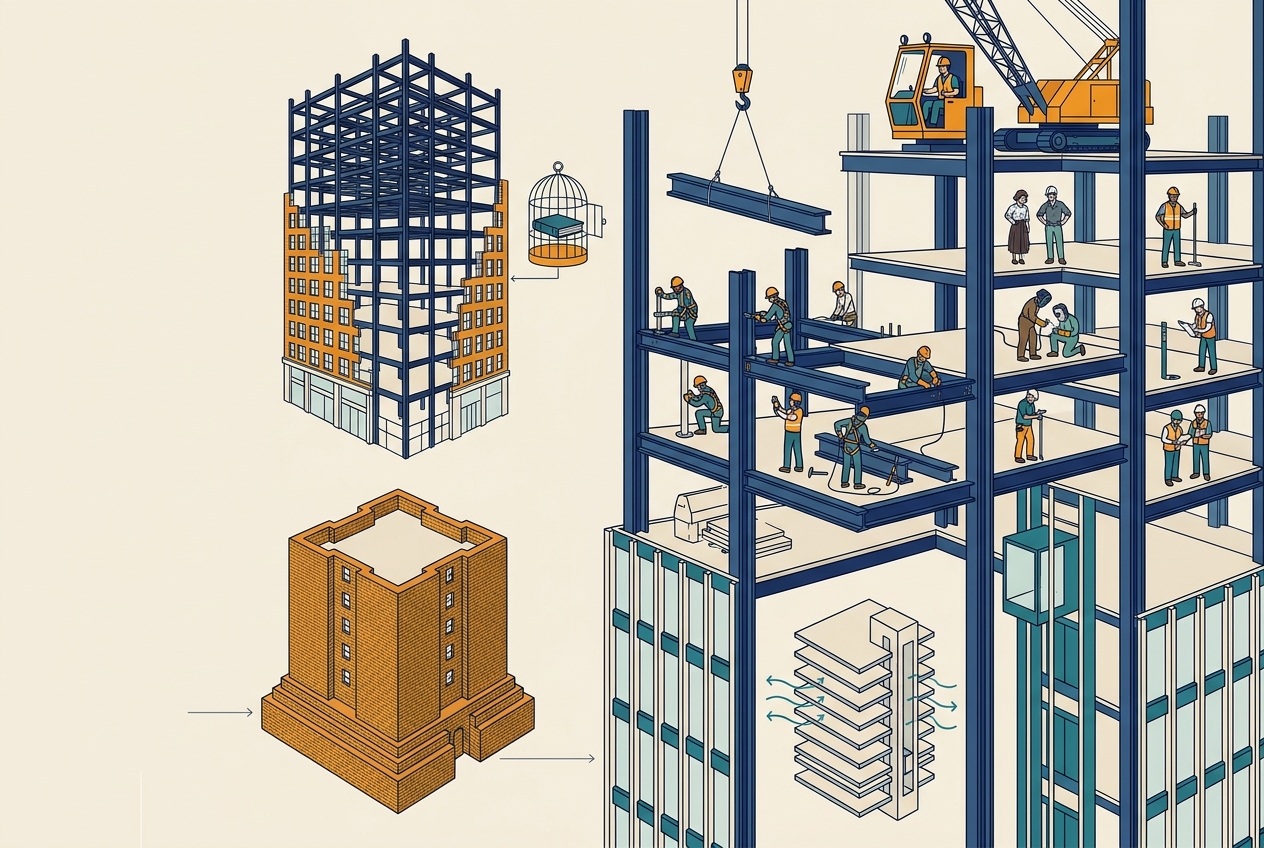
The Home Insurance Building, Chicago, 1885: ten stories on a skeleton of iron and steel. The walls hung from the frame instead of holding the building up. Architect William Le Baron Jenney had watched a birdcage carry a heavy book.
Before. Masonry walls carry load; the taller the building, the thicker the base. Chicago's Monadnock Building (1891, sixteen stories, load-bearing brick) has walls six feet thick at the ground.
After. Columns and beams carry the load; walls become skin. Floors stack without limit until wind, elevators and money say stop.
The trades. Ironworkers raise and bolt the steel; welders join it; the crane operator lifts every piece; inspectors test every connection.
Steel today. Rolled sections, high-strength bolts, welded moment connections, composite floors — and, increasingly, concrete cores with steel outriggers.
Why it matters. The steel frame is the technology half of the vertical push. Without it, land price could not become height.
 KHWKD9
reading